



Podcast: Play in new window | Download
 What happens when the machines we build begin to reshape the way we think about ourselves?
For centuries, every major technological revolution has forced humanity to confront the same fundamental question: As our tools become more powerful, what remains uniquely human?
Financial Times journalist, Sarah O’Connor has spent years exploring that question. In her remarkable book, We Are Not Machines, she examines how technology has transformed the world of work—from the agricultural revolution to the Industrial Revolution, the rise of computing, and now the rapid emergence of artificial intelligence. Through reporting from factories, workplaces, warehouses, and organizations on the front lines of technological change, she explores not only what technology can do, but what it means for the people who use it.
Her central argument is both timely and profound: The greatest danger may not be that machines become more like humans, but that humans begin to see themselves through the lens of machines.
In an era where organizations can measure more, automate more, and optimize more than ever before, leaders face a critical choice. Will technology be used to make work more human—or will it reduce people to data points, productivity metrics, and interchangeable parts?
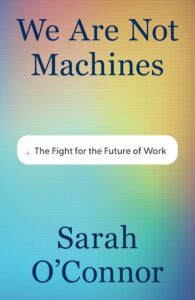 This conversation explores the lessons Sarah learned while researching the future of work, including what she discovered inside one of Amazon’s most advanced fulfillment centers, where humans and sophisticated robotics work side by side. It also examines the growing debate about artificial intelligence and whether predictions that AI will replace vast numbers of white-collar jobs reflect reality—or misunderstand the complexity of human contribution.
As AI becomes increasingly capable, Sarah challenges leaders to consider a deeper question: What qualities make human beings valuable when machines can perform more tasks than ever before? Creativity, judgment, empathy, relationships, curiosity, and purpose may become not less important, but more essential.
The conversation also explores who should decide how AI is introduced into organizations and what responsibility leaders have to ensure technology strengthens rather than undermines employee well-being. The future of work will not be determined by technology alone. It will be shaped by the choices leaders make about the kind of workplaces they want to create.
